
The Campbell Gutter Replacement That Stopped the Foundation Damage — What the Inspection Found and What the Project Cost
They called about sagging gutters. They were right that the gutters were sagging. They were not aware that the gutters had been directing water against their foundation for at least two seasons, and that the soil directly adjacent to their Campbell home’s foundation had been saturated repeatedly during every wet winter. Here is what the full inspection found and what it cost to fix correctly.
A Sagging Gutter Is Never Just a Cosmetic Problem
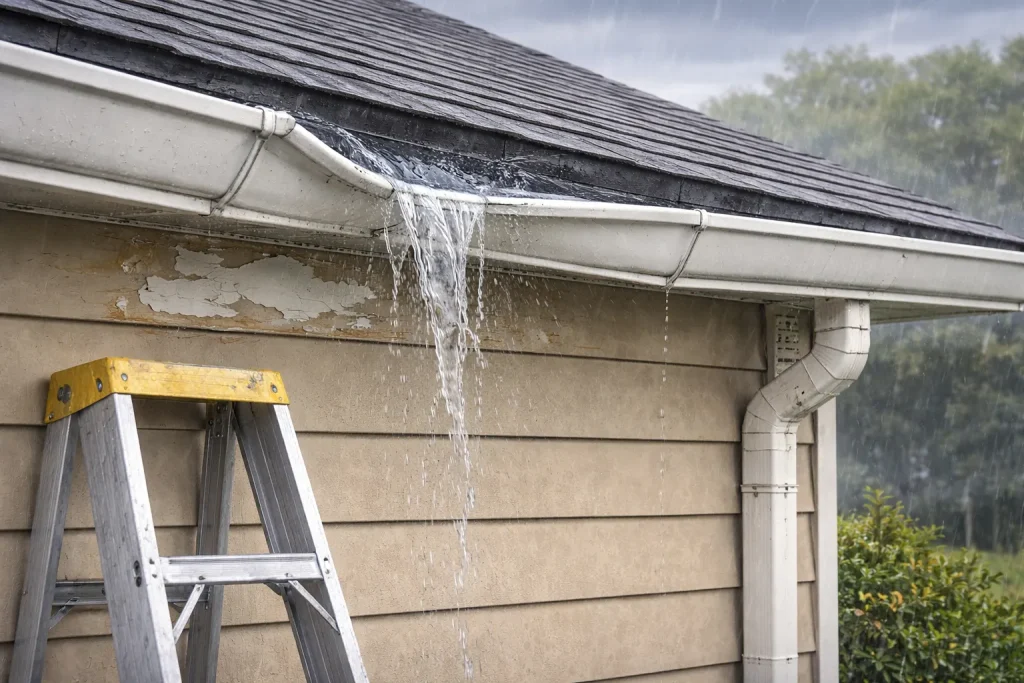
Most Campbell homeowners who notice a sagging gutter treat it as an appearance issue. The gutter looks bad. It is on the fix-eventually list. What is not always visible is what the sagging gutter is doing: directing water that should be flowing to a downspout into a continuous sheet that falls directly against the foundation and the soil immediately adjacent to it.
The Bay Area’s wet winters provide ample opportunity for a failed gutter to cause damage. Three or four significant rain events of two or more inches each, running off the roof and concentrating against the foundation through a failed gutter channel, can saturate the adjacent soil to a depth that reaches the foundation footing. In clay soils, common throughout the South Bay Area, saturated soil expands. Expanding soil pushes against foundations.
What Three Seasons of Failed Gutters Had Done
The Campbell homeowner in this story had been aware of the sagging gutter section for approximately three years. It was on the south side of the house, above the main entrance, and had sagged to the point where water was visibly sheeting off the edge rather than flowing to the downspout during moderate rain events.
During the Quality First inspection, four findings changed the scope of what had initially seemed like a straightforward gutter replacement:
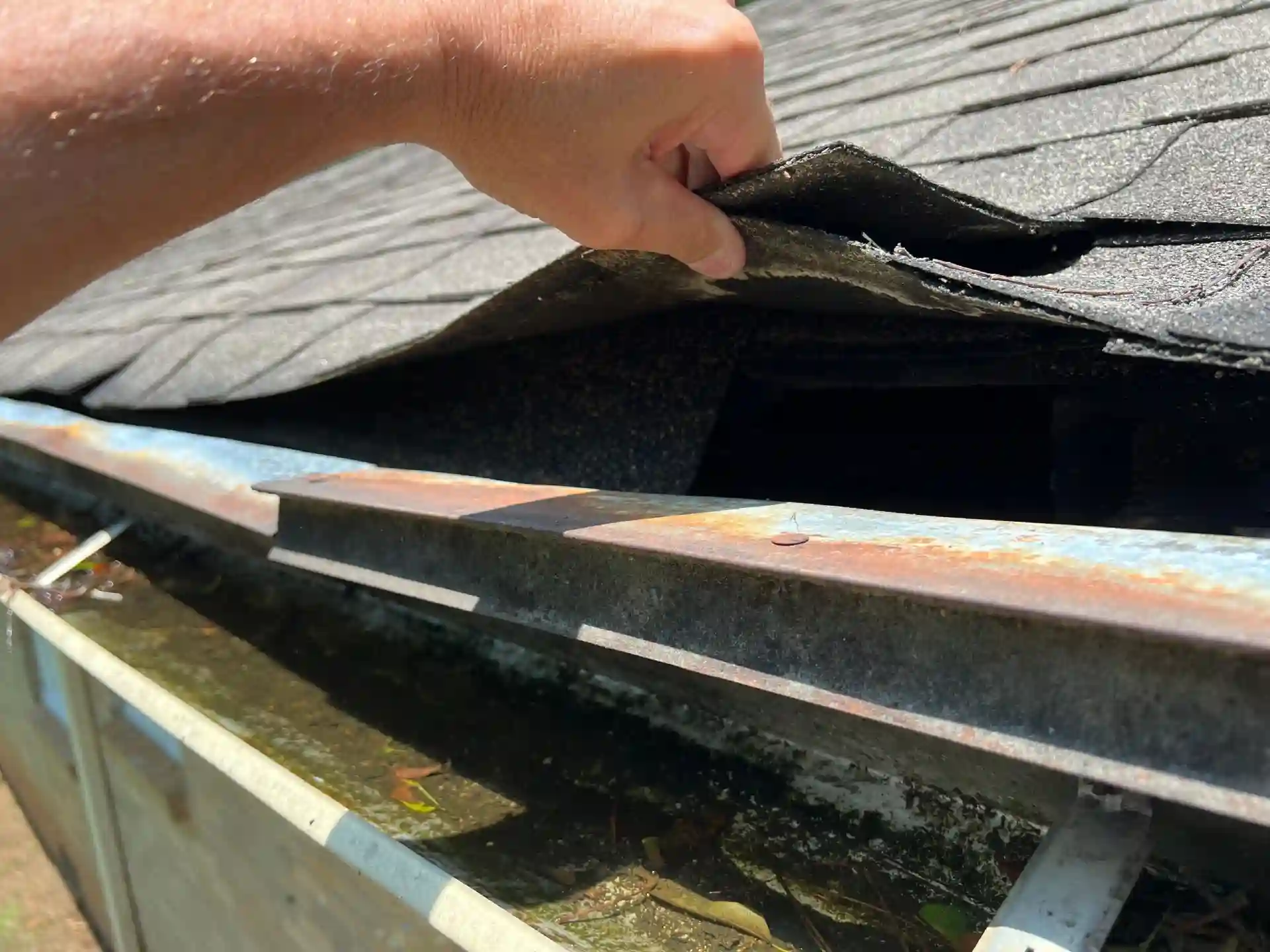
- Fascia damage: The fascia board behind the failed gutter section had been receiving water at every rain event for approximately three seasons. The wood had softened significantly, with visible rot extending approximately 6 feet along the south elevation.
- Soffit intrusion: Water running behind the gutter had reached the soffit at two points, with visible staining on the underside suggesting moisture had entered the rafter tail area.
- Soil saturation evidence: The soil directly adjacent to the south foundation wall showed subsidence — a slight depression where soil had compacted and settled after repeated saturation and drying cycles. This is a precursor to foundation soil movement.
- Downspout termination: The existing downspout terminated at grade level with no extension, directing all collected roof water to discharge directly against the foundation wall. Even when the gutter was functioning correctly, it had been depositing water at the worst possible location.
FEMA’s homeowner documentation notes that improper drainage — including gutters that terminate against the foundation rather than directing water away from it — is a primary contributing factor in residential foundation damage. The fix is rarely expensive when caught early. The remediation is almost always expensive when caught late.
What the Correct Scope of Work Included
The Gutter Replacement
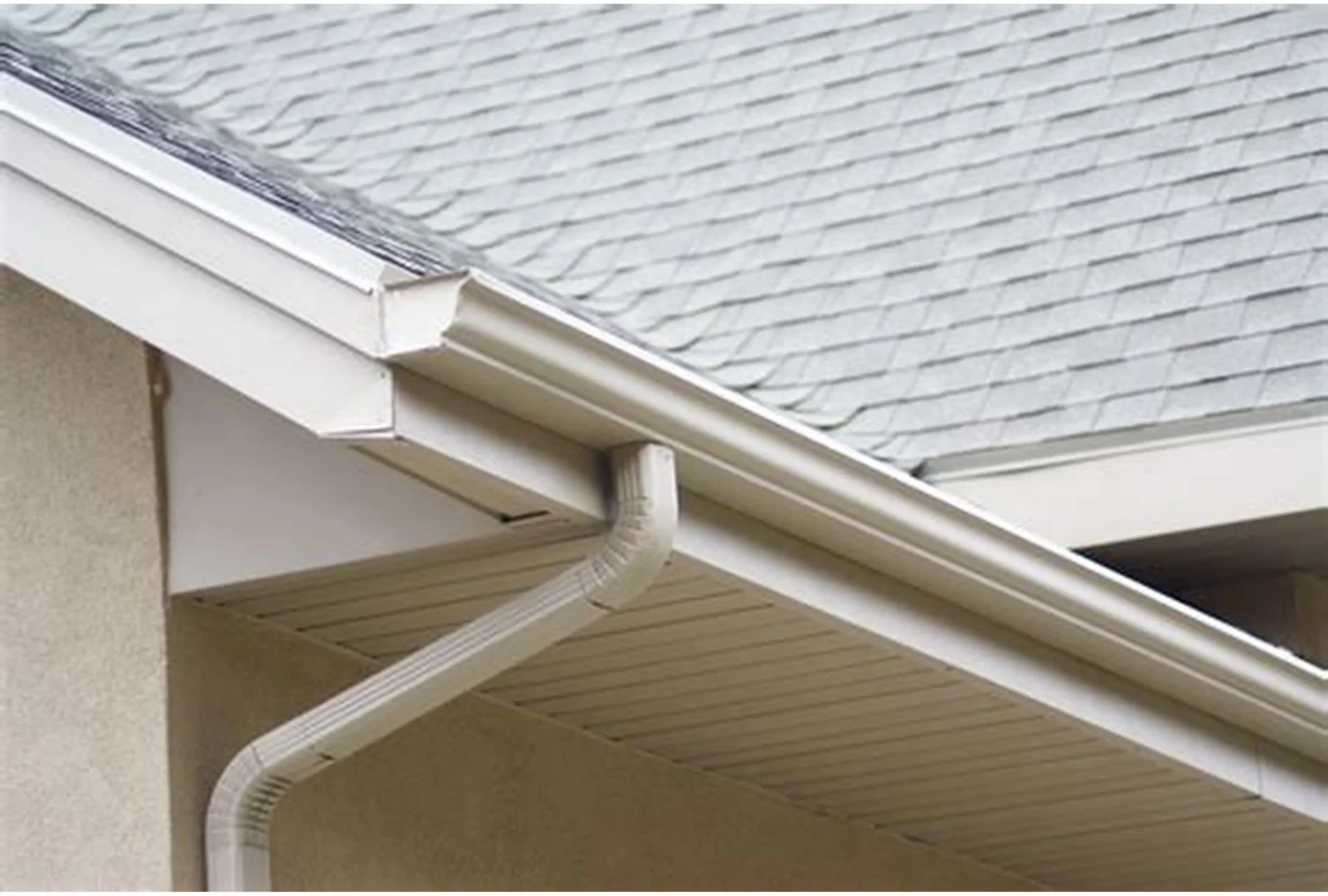
The existing 20-year-old sectional aluminum gutters were removed from all elevations. The replacement installation used seamless K-style aluminum gutters in a 5-inch profile with a baked enamel finish matching the home’s existing trim color. Gutter hangers were installed on 18-inch centers rather than the standard 24-inch centers, providing better support for the increased weight of debris and standing water during South Bay storm events.
Seamless gutters, formed from a continuous run of aluminum on a machine at the job site, eliminate the seam failure problem that causes dripping and accelerated fascia damage in sectional gutter systems. This is the appropriate replacement for a home with documented fascia damage.
The Fascia and Soffit Repair
The rotted fascia section on the south elevation was removed and replaced with new primed lumber before gutter installation. The soffit intrusion points were assessed, moisture-damaged material was removed and replaced, and the area was inspected from inside the attic to confirm the rafter tails had not been compromised. Fortunately, the rafter tails were sound; the moisture had not penetrated far enough to reach them.
The Downspout Extension
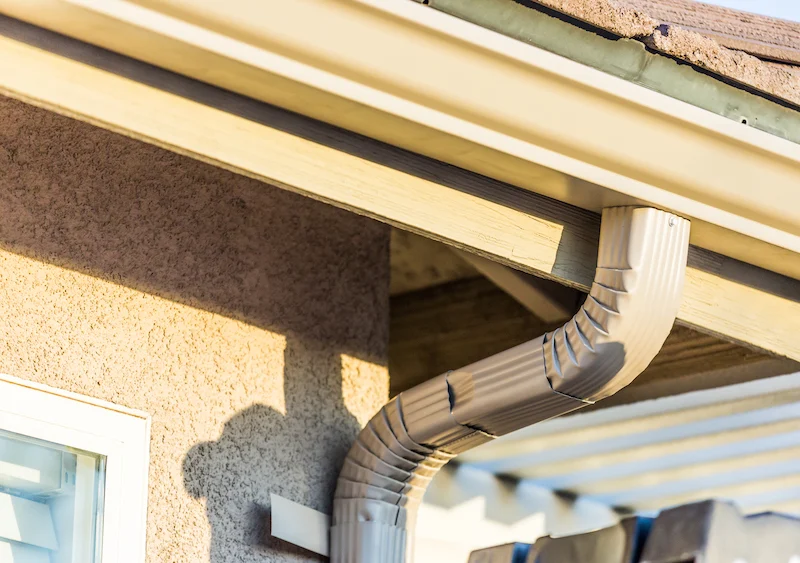
All downspouts on the property were extended with buried drain lines carrying roof water a minimum of 10 feet from the foundation before discharging to a gravel infiltration pit. This is the critical fix that most gutter replacements skip, because the downspout extension is invisible and easy to omit. Without it, a perfectly installed new gutter system continues to deposit water at the foundation with every rain event.
The Real Cost
The complete scope- gutter replacement, fascia repair, soffit repair, and downspout extension- came to $6,800. The homeowner had received one prior quote for gutter replacement only at $2,400 that did not include fascia inspection, soffit assessment, or downspout extension work.
The cost comparison that matters: a foundation repair for soil movement damage in the South Bay Area runs $8,000 to $25,000 depending on the scope of settlement and repair method required. The $6,800 full-scope gutter project addressed the conditions creating the foundation risk. The $2,400 gutter-only quote would have installed new gutters over a rotted fascia and continued to deposit water at the foundation.
Gutters That Work the Way They Are Supposed To
The Campbell homeowner’s response when the project was complete: they wished they had called three years earlier. The three seasons of water concentration at the south foundation had cost them fascia replacement and soffit repair that would not have been needed if the gutters had been addressed when the sag first appeared.
A gutter that is not working correctly is not a cosmetic problem. It is a water management failure that gets more expensive with every wet season you wait.
Quality First Installs Complete Gutter Systems in Campbell and All Service Areas
Quality First Home Improvement installs complete seamless gutter systems across Campbell, San Jose, and all of our Northern California and Nevada service areas. Every project includes a full inspection of existing fascia and soffit condition, downspout termination assessment, and a complete recommendation for proper drainage routing. We do not offer gutter repair services. We provide complete gutter replacements.
FREQUENTLY ASKED QUESTIONS
How much does gutter replacement cost in Campbell, CA?
Gutter replacement in Campbell typically runs $1,800 to $4,500 for a complete seamless aluminum gutter installation on a standard single-family home, depending on linear footage, number of downspouts, and any fascia or soffit repair needed. Projects requiring fascia replacement, soffit repair, or buried downspout extensions add to the base gutter cost. Quality First provides free in-home assessments that include inspection of fascia and soffit condition before presenting a complete scope and pricing.
What are seamless gutters and are they better than regular gutters?
Seamless gutters are formed from a continuous run of aluminum on a specialized machine at the job site, eliminating the seams that occur every 10 to 12 feet in standard sectional gutters. Sectional gutter seams are caulked during installation and fail over time, allowing water to drip at each joint and accelerating fascia damage. Seamless gutters eliminate this failure mode. In the Bay Area’s wet winters, seamless construction is the appropriate choice for a long-lasting installation.
How can I tell if my gutters are damaging my foundation?
Signs that gutter failure may be affecting your foundation include visible soil subsidence adjacent to the foundation, water staining on the foundation wall, efflorescence on concrete or brick foundation surfaces, basement or crawl space moisture after rain events, and sagging gutters that visibly sheet water over the edge rather than directing it to a downspout. Any combination of these symptoms warrants a full gutter and drainage inspection before the next wet season.
Do downspout extensions really matter?
Yes, significantly. A properly installed gutter that terminates its downspout at grade level adjacent to the foundation is still directing all collected roof water to discharge at the worst possible location — directly against the foundation soil. Downspout extensions — surface splash blocks, flexible extensions, or buried drain lines — are the component that makes gutter water management complete. FEMA identifies improper drainage termination as a primary contributor to residential foundation damage.
How often should gutters be replaced?
Aluminum gutters typically last 20 to 30 years when properly maintained. The most common failure modes are sectional seams failing, fascia hanger screws pulling out, causing sections to sag, and physical damage from debris or falling branches. In the South Bay Area, where wet winters stress gutter capacity, inspection every 2 to 3 years is recommended. Gutters that are sagging, separating at seams, or pulling away from the fascia should be replaced rather than repaired.
Does Quality First do gutter cleaning or gutter repair?
Quality First Home Improvement does not offer gutter cleaning or gutter repair services. We provide complete gutter replacements — full removal of the existing system and installation of a new seamless aluminum system with proper hanger spacing, downspout placement, and drainage routing. If your existing gutters are at the end of life or have caused associated fascia or soffit damage, a Quality First free in-home consultation will assess the full scope and provide complete project pricing.
Quality First Home Improvement serves Sacramento, Citrus Heights, Roseville, Rocklin, Elk Grove, Folsom, Davis, Concord, Walnut Creek, Pleasant Hill, Campbell, San Jose, CA, and Reno and Sparks, NV. 20+ years. 79,000+ homeowners served. GAF Master Elite Certified. Diamond Certified.