
Why Sacramento’s Allergy Season Is Actually an HVAC Problem: What Your Air System Is (and Isn’t) Filtering Out
Sacramento Valley residents deal with one of the longest allergy seasons in the country, stretching from late winter tree pollen through summer grass pollen into fall ragweed, with wildfire smoke season now overlapping much of it. Most homeowners treat allergy symptoms as a medical problem to manage with medication, not a home problem to manage with equipment. The uncomfortable truth is that a standard HVAC system, the kind installed in most Sacramento-area homes, is not designed to filter the particles actually causing indoor symptoms. The system that is supposed to make the inside of the home a refuge from outdoor air often is not doing that job at all.
The Sacramento Valley’s Allergy Season Is Longer Than Most Regions
The Central Valley’s mix of oak, olive, and juniper trees, combined with extensive agricultural grasses, produces a pollen season that starts earlier and runs longer than in most parts of the country. On top of that, Sacramento has experienced a growing number of wildfire smoke events in late summer and early fall, adding fine particulate matter to an already extended allergy calendar. For much of the year, the outdoor air quality in the region is actively working against anyone with seasonal allergies or asthma.
This matters because most homeowners assume that once windows are closed and the air conditioning is running, the indoor air is clean. In practice, standard HVAC systems recirculate indoor air through a filter never designed to capture the smallest, most irritating particles, while gaps in the duct system and building envelope keep introducing outdoor air anyway.
The Standard HVAC Filter Is Not Built for This
Most residential HVAC systems ship with a fiberglass filter rated MERV 1 to 4, whose primary job is protecting the equipment from large debris, not protecting the occupants from fine particles. Pollen, mold spores, and pet dander fall in a size range that a MERV 4 filter passes through largely unaffected. Wildfire smoke particulate is even smaller and passes through low-MERV filtration almost entirely.
A MERV 13 filter, by contrast, captures the vast majority of pollen, mold spores, and a meaningful share of fine smoke particulate, but not every HVAC system can run one without modification. Standard residential blowers are often not sized to handle the airflow resistance of a high-MERV filter, and forcing one into an incompatible system can reduce airflow enough to strain the equipment and reduce comfort throughout the home.
Duct Leakage Undermines Filtration Before Air Ever Reaches the Filter
A home can have the correct filter installed and still have poor indoor air quality if the duct system is leaking. Ducts routed through attics, a near-universal design in Sacramento-area homes, commonly leak 20 to 30 percent of conditioned airflow, and that leakage works in both directions: conditioned air escapes into the attic, and unfiltered attic air, along with whatever dust, insulation particles, and outdoor pollutants have accumulated there, gets pulled into the duct system through the same gaps.
This means a home can be running a high-quality filter and still be circulating unfiltered attic air throughout the living space. Sealing duct leakage is often a precondition for filtration upgrades to actually deliver the air quality improvement homeowners expect.
What Actually Helps: Matching the System to the Filtration Goal
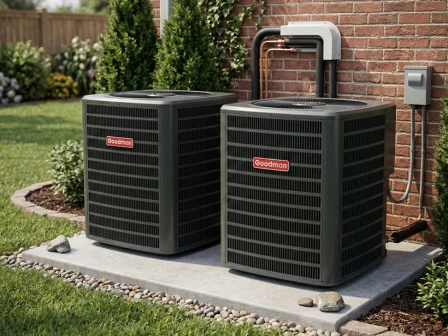
The right approach depends on what the existing HVAC system can support. Some systems can be upgraded to handle a MERV 13 filter directly with only minor adjustments. Others need a dedicated whole-home air filtration or purification unit added to the system, designed specifically to handle finer filtration without overloading the existing blower. In both cases, duct sealing is typically addressed at the same time, since it is the foundation the rest of the filtration strategy depends on.
Quality First Home Improvement evaluates the existing HVAC system, duct condition, and airflow capacity before recommending a specific filtration approach, rather than defaulting to a single solution regardless of what a given system can actually support.
When an Aging HVAC System Is Making the Problem Worse
An HVAC system nearing the end of its service life often has additional issues compounding the filtration problem: degraded seals at the blower housing, reduced airflow from years of accumulated dust in the ductwork, and older equipment that was never designed to accommodate modern filtration standards in the first place. For homeowners in this position, a full system evaluation, not just a filter swap, is usually what actually resolves persistent indoor allergy symptoms.
Quality First Comfort, the company’s HVAC line, is built around this kind of full-system approach, addressing the equipment, the ductwork, and the filtration strategy together rather than treating them as separate purchases.
FREQUENTLY ASKED QUESTIONS
Can my HVAC system make allergies worse instead of better?
Yes, in two ways. A standard low-MERV filter does not capture pollen, mold spores, or fine smoke particulate, so the system provides little filtration benefit. Separately, duct leakage can pull unfiltered attic air, dust, and outdoor particulate into the airflow the system distributes throughout the home.
What MERV rating do I need to filter out pollen and wildfire smoke?
A MERV 13 filter captures the large majority of pollen, mold spores, and a meaningful share of fine wildfire smoke particulate. Not every HVAC system can run a MERV 13 filter without modification, since higher-MERV filters restrict airflow more than standard filters, and some residential blowers are not sized to handle that resistance.
Why does Sacramento have such a long allergy season?
The Central Valley’s mix of oak, olive, and juniper trees combined with extensive agricultural grasses produces overlapping pollen seasons that begin earlier and extend later than in most regions, and a growing pattern of late-summer and early-fall wildfire smoke events adds fine particulate exposure on top of the existing pollen calendar.
Do I need to seal my ducts before upgrading my air filter?
Duct sealing is not strictly required to upgrade a filter, but leaking ducts routed through an attic can pull unfiltered attic air into the system, undermining much of the benefit of a higher-quality filter. Addressing duct leakage alongside a filtration upgrade generally produces a more noticeable improvement in indoor air quality.
Is a whole-home air filtration system different from just upgrading my HVAC filter?
Yes. A whole-home filtration or purification unit is added to the HVAC system specifically to handle finer filtration without overloading the existing blower, which is useful for systems that cannot support a high-MERV filter directly. A standard filter upgrade works only for systems with sufficient airflow capacity to handle the added resistance.
Quality First Home Improvement serves Sacramento, Citrus Heights, Roseville, Rocklin, Elk Grove, Folsom, Davis, Concord, Walnut Creek, Pleasant Hill, Campbell, San Jose, CA, and Reno and Sparks, NV. 20+ years. 79,000+ homeowners served. GAF Master Elite Certified. Diamond Certified.