
Your Bathroom Sends More People to the ER Than Any Other Room in Your House | Quality First
Most people to name the most dangerous room in a house, and they will guess the kitchen, thinking of knives and open flames, or the garage, thinking of power tools and car exhaust. According to the Consumer Product Safety Commission, they are both wrong. More than 235,000 Americans end up in the emergency room every year because of bathroom injuries, making it the single leading location for nonfatal home injuries in the country, and the numbers get significantly worse with age. On top of that, the bathroom is also the room most likely to have something growing in the walls that nobody has noticed yet. This is not a room most homeowners think to renovate for health and safety reasons. It is usually renovated for style. The data suggests that is exactly backwards.
The Bathroom Fall Numbers Are Not a Minor Statistic
CPSC injury surveillance data consistently identifies the bathroom as the room where the most nonfatal home injuries occur, the overwhelming majority involving slips and falls on wet, hard surfaces. Adults over 65 are disproportionately represented in these numbers, and falls in this age group are far more likely to result in serious injury, including hip fractures, which carry a notably elevated mortality risk in the following year according to geriatric medicine research.
This is not a statistic about clumsy accidents. It is a statistic about bathroom design: hard tile surfaces, high tub walls that require stepping over an obstacle while wet, and an almost complete absence of anything to grab onto in the exact moment someone loses their footing
Why the Standard Tub-Shower Combo Is Working Against You
The traditional tub-shower combination, still the default in a large share of American homes, requires stepping over a raised tub wall while wet, onto a wet surface, often while reaching for a shower curtain rather than a fixed grab bar. Every part of that sequence increases fall risk, and it is a sequence repeated daily by every person in the household, regardless of age or mobility.
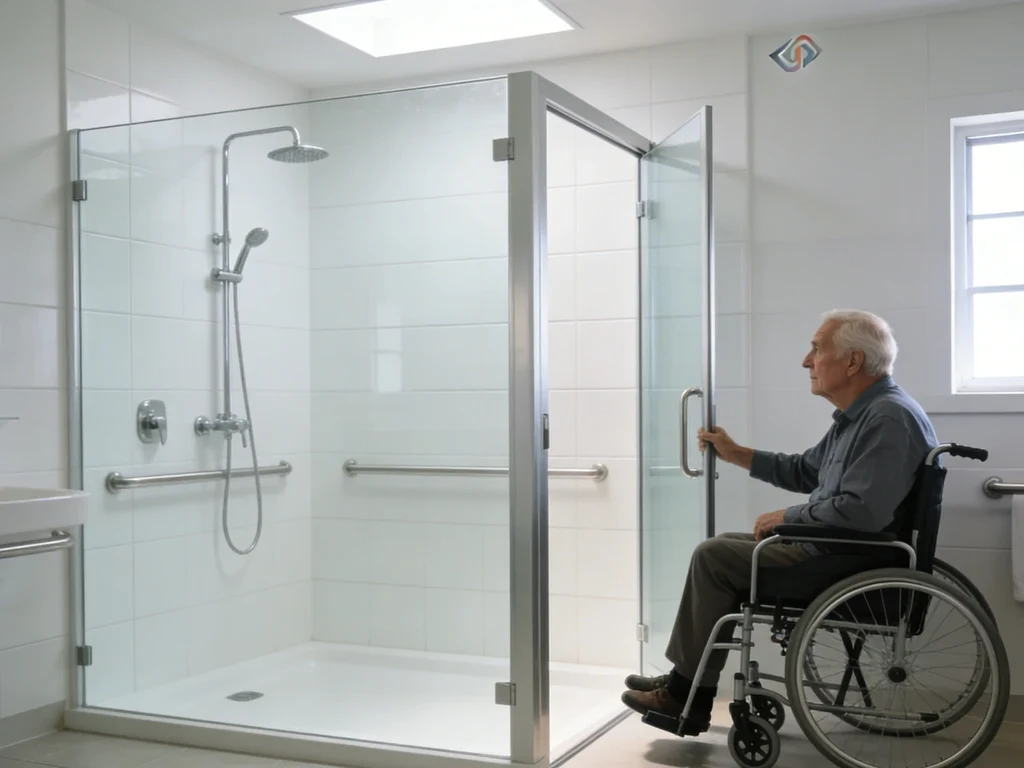
A curb-less walk-in shower removes the stepping-over hazard entirely, replacing it with a flush, zero-threshold entry that does not require balance or a weight shift over an obstacle. This is not a luxury feature marketed toward aging homeowners specifically. It reduces fall risk for every person who uses that bathroom, at every age, every single day.
Grab Bars Are Not Just for People Who “Need” Them Yet
Grab bars carry an outdated stigma as a medical accommodation installed only after a fall has already happened. That framing gets the timing backwards. A grab bar installed before it is needed is a fall prevented. Modern grab bars are designed to look like standard bathroom hardware rather than medical equipment, which removes the aesthetic objection that used to be the main reason homeowners avoided installing them proactively.
Bathroom renovations that incorporate grab bar-ready wall blocking behind the tile, even when bars are not installed immediately, allow a home to be upgraded quickly later without reopening finished walls, a detail almost no homeowner thinks to request but one worth building in as standard practice
The Bathroom Is Also Where Mold Quietly Wins
Bathrooms combine three things mold needs to thrive: consistent moisture, warmth, and, in a lot of homes, inadequate ventilation to clear humid air before it settles into grout, drywall, and the cavity behind the shower wall. The EPA identifies bathrooms as one of the most common sources of indoor mold growth in residential homes, and mold exposure is linked to respiratory irritation, allergic reactions, and worsened asthma symptoms, particularly in children and people with existing respiratory conditions.
The mold problem is rarely visible until it already has a foothold, since it frequently develops inside wall cavities and behind fixtures before it ever reaches a surface a homeowner can see. By the time visible mold appears on grout or drywall, moisture has usually been accumulating in the wall assembly for a meaningful stretch of time already.
Ventilation and Moisture Barriers Are the Actual Fix, Not Bleach
An exhaust fan that is undersized, poorly vented, or simply not run long enough after a shower does not remove humid air fast enough to prevent it from settling into porous surfaces. Proper bathroom ventilation, sized correctly for the room and vented to the exterior rather than into an attic space, is the primary defense against the moisture buildup that leads to mold in the first place.
Behind the wall, a proper vapor barrier matters just as much as the fan itself. Johns Manville insulation and moisture-barrier products, installed correctly during a bathroom renovation, help prevent humid air from migrating into wall cavities and framing where it can condense and create the exact conditions mold needs to establish itself.
Renovating With Health and Safety in Mind, Not Just Style
The homeowners least likely to think about bathroom fall risk or mold exposure are often the ones who benefit most from addressing it early: a household renovating a bathroom in their 40s or 50s, with aging parents visiting regularly or with the expectation of living in the home for decades, rarely frames a bathroom remodel as a health project. It usually gets framed purely as an aesthetic upgrade, with fall prevention and moisture control treated as unrelated, future concerns.
Quality First Home Improvement designs bathroom renovations with these features integrated from the start: curb-less showers, slip-rated flooring, grab bar-ready blocking, and correctly sized ventilation with proper moisture barriers, rather than treating safety and air quality as separate upgrades layered on after the fact. For homeowners ready to see what a renovation actually involves, Quality First Home Improvement’s bathroom remodeling services start with an evaluation of the existing layout, ventilation, and moisture conditions before any design work begins.
FREQUENTLY ASKED QUESTIONS
Is the bathroom really the most dangerous room in a house?
According to Consumer Product Safety Commission injury data, the bathroom is the leading location for nonfatal home injuries in the United States, with more than 235,000 emergency room visits annually attributed to bathroom-related incidents, the large majority involving slips and falls.
Why is mold so common in bathrooms specifically?
Bathrooms combine consistent moisture, warmth, and often inadequate ventilation, which the EPA identifies as the primary conditions that allow mold to establish itself. Mold frequently develops inside wall cavities before it becomes visible on surfaces like grout or drywall.
Can mold in the bathroom actually affect my health?
Yes. Mold exposure is linked to respiratory irritation, allergic reactions, and worsened asthma symptoms, particularly in children and people with existing respiratory conditions, according to EPA and CDC guidance on indoor mold.
Do I need a curb less shower if I am not elderly or have mobility issues?
A curb less, zero-threshold shower reduces fall risk for every person using the bathroom regardless of age, since it removes the step-over hazard inherent to a traditional tub wall. It is not limited in usefulness to older adults or people with existing mobility limitations.
Will a bathroom exhaust fan alone prevent mold?
An exhaust fan helps, but only if it is properly sized, vented to the exterior rather than into an attic space, and run long enough to clear humid air after each shower. A correctly installed vapor barrier behind the wall is equally important in preventing moisture from migrating into framing and cavities where mold can develop unseen.
Quality First Home Improvement serves Sacramento, Citrus Heights, Roseville, Rocklin, Elk Grove, Folsom, Davis, Concord, Walnut Creek, Pleasant Hill, Campbell, San Jose, CA, and Reno and Sparks, NV. 20+ years. 79,000+ homeowners served. GAF Master Elite Certified. Diamond Certified.