
Every deferred home repair has a compounding cost curve. The repair that costs $300 today does not stay at $300 when you put it off. At six months it becomes something else. At one year it becomes something more expensive. At three years it has often become a completely different problem that costs ten to twenty times more to solve. Here is exactly what that curve looks like, with real numbers.
Deferred Repairs Do Not Stay Deferred — They Compound
Home repairs get put off for understandable reasons. The timing is not right. The budget is tight. The problem does not seem urgent. And for a while, nothing dramatic happens. The ceiling stain does not spread. The gutter sag does not get worse. The cracked caulk line does not cause a visible leak.
This is the most dangerous phase of a deferred repair: the period where nothing visible has changed, but the underlying damage is compounding. Water is getting in somewhere and traveling. Wood is absorbing moisture in cycles. Rust is forming at metal connections. Insulation is losing R-value as it wets and dries repeatedly.
By the time the problem becomes visible, by the time the ceiling stain spreads or the gutter pulls away or water appears inside, the original $300 problem has grown into something significantly more expensive. And the original repair is no longer an option. What was once a targeted fix is now a remediation project.
Four Examples Where Waiting Changed the Cost Completely
These are not hypothetical scenarios. They are representative examples based on the types of situations our team sees regularly across Northern California and Nevada. The specific dollar amounts will vary by home, market, and scope, but the cost multiplication pattern is consistent.
Example 1: A Failed Pipe Boot
A cracked rubber collar on a plumbing vent pipe boot allows water to enter the roof assembly at that penetration point every time it rains. The pipe boot is a $50 part.
- Repair at time of discovery: $150 to $300 including labor. The problem is contained.
- At 6 months: Water has been running down the inside of the roof deck and soaking the insulation directly below. The pipe boot repair is still $300. Wet insulation replacement adds $400 to $800.
- At 1 year: The roof deck in a 3 to 4 square foot area around the boot has begun to soften. Boot replacement plus deck repair: $800 to $1,400.
- At 3 years: The deck section has rotted through. Water has been reaching the ceiling drywall. Roof deck replacement, new boot, insulation, and ceiling repair: $3,500 to $6,000.
Cost multiplier: 12x to 20x over three years from a $300 starting point.
Example 2: A Gutter Pulling Away from the Fascia
A section of gutter that has lost two or three hanger screws tilts away from the fascia and directs water behind the gutter instead of into the downspout. The fix at the point of discovery is a hanger tightening or replacement.
- Repair at time of discovery: $75 to $150 if the fascia is sound.
- At 6 months: The fascia behind the loose section has been receiving water at every rain. Soft spots appear. Gutter re-hanging plus fascia repair: $400 to $700.
- At 1 year: Fascia rot has extended into the soffit and the rafter tail behind it. Structural repair plus new gutter section: $900 to $1,800.
- At 3 years: Rot has progressed to the rafter tails and framing. Water is wicking up under the roof edge. Full repair including structural elements: $2,500 to $5,000.
Cost multiplier: 17x to 33x over three years.
Example 3: An HVAC System Running on a Failing Capacitor
A capacitor that is beginning to fail causes the HVAC compressor to work harder to start each cycle. The capacitor is a $20 to $40 part with a $150 to $250 replacement cost including labor.
- Repair at time of symptoms (hard starting, extended run times): $150 to $250.
- At 6 months: The compressor has been starting under excess load for hundreds of cycles. Compressor wear is measurable. Capacitor replacement plus service visit: $300 to $400.
- At 1 year: The compressor has failed. Compressor replacement: $1,200 to $2,500.
- At 3 years: A compressor failure left unaddressed has damaged the condenser coil and refrigerant lines. Full system replacement: $4,000 to $10,000.
Cost multiplier: 16x to 40x over three years.
Example 4: Exterior Caulk Failure at Window Frames
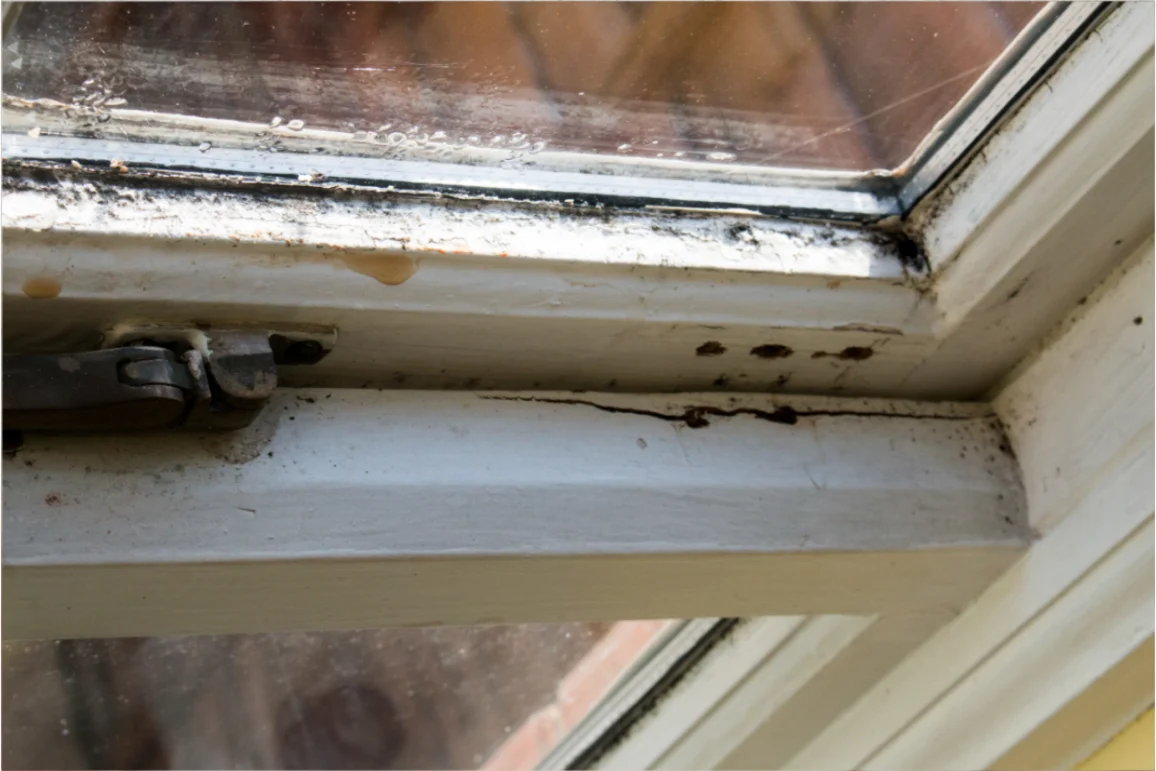
Failed exterior caulk at window frames allows air and water infiltration. The recaulking cost is modest. The compounding effects over time are not.
- Recaulk at time of discovery: $200 to $500 for a full exterior recaulk.
- At 6 months: Air infiltration has been measurably increasing heating and cooling costs. Recaulk plus energy cost already incurred: $400 to $700 effective cost.
- At 1 year: Water infiltration at one or two windows has reached the window frame. Recaulk plus frame repair: $800 to $1,500.
- At 3 years: Window frames have rotted at infiltration points. One or two windows may need full replacement. Window replacement plus recaulk: $3,000 to $8,000.
Cost multiplier: 6x to 16x over three years.
The Consistent Pattern: Why Home Repair Costs Compound
Across all four examples, the compounding mechanism is the same: the original failure creates a condition that allows water, air, or mechanical stress to continuously damage adjacent components. Each component that fails increases the scope of what needs to be addressed when the repair is finally made.
The other consistent factor is invisibility. Every one of these compounding processes happens inside walls, in attic spaces, under roofing layers, or in the mechanical systems that homeowners rarely inspect. By the time the damage is visible, the compounding has already occurred.
The Case for Proactive Maintenance Over Reactive Repair
Proactive maintenance, finding and addressing problems at or near the point of initial failure, is the most reliable way to keep home maintenance costs under control over time. The U.S. Department of Energy estimates that proactive home maintenance saves homeowners an average of 12 to 18 percent of annual maintenance costs compared to reactive repair approaches.
This is not about spending more money on your home. It is about spending money at the right time, when a small investment stops a compounding problem rather than a large investment addresses the consequences of one.
Quality First Home Improvement does not offer repair services. We provide complete installations and full replacements. But we publish content like this because informed homeowners make better decisions, including the decision to have a targeted repair done early, by someone else, before the problem compounds into something that genuinely requires a full replacement.
FREQUENTLY ASKED QUESTIONS
What happens if you ignore home repairs?
Ignored home repairs compound. Water infiltration at a small point spreads to adjacent structural components. Mechanical systems operating under excess load fail at additional points. The original repair cost, which may have been $150 to $500, becomes a remediation cost of $3,000 to $20,000 depending on how long the underlying problem ran and how many adjacent components it damaged. The compounding is usually invisible, happening inside walls, in attic spaces, or in mechanical systems, which is why the damage can be significant by the time any visible symptom appears.
How much does deferred home maintenance cost?
The U.S. Department of Energy estimates that proactive home maintenance saves an average of 12 to 18 percent of annual maintenance costs compared to reactive repair. In practice, specific deferred repairs can compound dramatically: a $300 pipe boot repair left for three years can become a $3,500 to $6,000 remediation. A $150 gutter re-hanging left for three years can become a $2,500 to $5,000 structural repair. The cost multiplication depends on the nature of the original problem and how much adjacent damage accumulated while it was left unaddressed.
How do I know if a home repair is urgent?
Urgency is highest when the failure is allowing active water infiltration, when a mechanical system failure is creating excess load on adjacent components, or when a structural element is involved. As a practical guide: any visible evidence of current water entry (fresh staining, soft material, mold smell) is urgent. Failed pipe boots, open roof flashings, disconnected HVAC components, and gutters pooling water against the foundation all represent active compounding situations. Cosmetic failures, paint fading, minor surface cracking, have much lower urgency and compound slowly if at all.
Is it worth fixing an old roof or should I replace it?
The answer depends on age, condition, and the scope of the repair. If the roof is within 5 to 8 years of the end of its expected lifespan (typically 20 to 30 years for asphalt shingles) and has multiple problem areas, replacement is usually the smarter financial decision, because repair costs will continue to accumulate while the underlying shingles age toward full replacement anyway. If the roof is in the first two-thirds of its lifespan and the problem is isolated and repairable, targeted repair makes sense. Quality First Home Improvement provides complete roof replacements and can assess which direction makes sense during a free in-home consultation.
Does Quality First do roof repairs?
Quality First Home Improvement provides complete roofing installations and full replacements. We do not offer targeted repairs. If a free in-home consultation determines that your roof has meaningful remaining life and a targeted repair is the right call, we will tell you directly and you can have a repair contractor address it. Our goal is to give you honest information, not to sell a replacement when a repair is the right answer.
How often should I inspect my home for maintenance issues?
Twice annually is the standard recommendation: once in spring before peak summer conditions and once in fall before the rainy season. In California and Nevada markets, these two inspections cover the primary stress periods for different home systems. A spring inspection should focus on HVAC readiness, roof condition after winter, and exterior surfaces including caulk and paint. A fall inspection should focus on gutters, roof flashings, window seals, and drainage. Finding a problem in either inspection while it is still isolated and small is the most reliable way to keep maintenance costs under control.
Quality First Home Improvement serves Sacramento, Citrus Heights, Roseville, Rocklin, Elk Grove, Folsom, Davis, Concord, Walnut Creek, Pleasant Hill, Campbell, San Jose, CA, and Reno and Sparks, NV. 20+ years. 79,000+ homeowners served. GAF Master Elite Certified. Diamond Certified.