
Most San Jose homeowners assume running out of hot water means one thing: replace the water heater. The truth is there are seven distinct causes, and only one of them actually requires a full replacement.
The Morning Rush That Never Has Enough Hot Water
It happens the same way every time. The first person to shower gets a normal hot shower. The second person gets a warm shower. By the time the third person steps in, it’s cold, and nobody knows why.
Or maybe it’s just you, alone in the house, and your 10-minute shower turns lukewarm at the 6-minute mark. Every single morning.
Running out of hot water is one of the most searched home problems in San Jose, and one of the most misunderstood. Most homeowners assume it means their water heater needs to be replaced. Sometimes it does. But often the fix is simpler, cheaper, and something most homeowners have never heard of.
This guide walks through every common cause of hot water running out in a San Jose home, from sediment buildup and failing heating elements to undersized tanks and peak demand problems and tells you exactly what fixes each one.
According to the U.S. Department of Energy, water heating accounts for approximately 18% of a home’s energy use and is typically the second largest energy expense in any household. When your water heater is struggling, your energy bill feels it before you do.

Why This Problem Gets Worse Over Time
A water heater that occasionally runs short is almost always one that is actively deteriorating. The problems that cause hot water shortages, sediment buildup, failing anode rods, weakening heating elements, do not stabilize on their own. They compound.
Sediment that reduces your first-hour rating by 20% this year will reduce it by 35% next year. A heating element running at 60% capacity today will fail completely within 12 to 18 months. And a tank that’s 12 years old is operating on borrowed time regardless of its symptoms, the average lifespan of a conventional storage water heater, according to the U.S. Department of Energy, is 10 to 15 years.
Beyond the inconvenience, a failing water heater in San Jose can mean escalating PG&E bills, potential tank leaks, which can cause significant water damage to your home, and eventually an emergency replacement on a timeline that is not yours to choose.
The pattern: A water heater that runs short today becomes a water heater that fails entirely within 1 to 3 years. The time to act is before the failure, not after.

The 7 Real Reasons Your San Jose Home Runs Out of Hot Water
1. Sediment Buildup in the Tank
San Jose is served by a mix of surface water and groundwater through the Santa Clara Valley Water District. That water, while treated, contains naturally occurring minerals, primarily calcium and magnesium, that settle to the bottom of your storage tank over time and form a hardened sediment layer.
That sediment does two damaging things. First, it acts as an insulating barrier between the burner or heating element and the water, forcing your heater to work harder and longer to reach the same temperature, which drives up your PG&E bill. Second, it physically reduces the volume of hot water available in your tank, because sediment is taking up space that water should occupy.
On a 50-gallon tank with 4 to 6 inches of sediment buildup, common in tanks over 8 years old in areas with moderate water hardness,you may effectively have a 38 to 42-gallon tank. That is a significant reduction in first-hour rating.
The fix: A professional tank flush, performed annually, removes sediment and restores capacity. If sediment has hardened significantly, a full replacement may be more cost-effective than continued maintenance. The U.S. Department of Energy recommends flushing a quart of water from the storage tank every three months as basic maintenance.
Signs of sediment buildup: popping or rumbling sounds from the tank when it heats, reduced hot water volume, and water that appears slightly cloudy or discolored when first turned on.
2. A Failing or Failed Heating Element (Electric Water Heaters)
Most electric water heaters in San Jose homes have two heating elements, an upper element and a lower element. The upper element heats the top portion of the tank for immediate demand. The lower element handles the bulk heating over time.
When the lower element fails, you may still get hot water, but only from the upper portion of the tank. Depending on your tank size, that can mean 10 to 20 gallons of hot water instead of 40 to 50. You will notice it immediately as a shortened shower or a quick cooldown during dishes.
When the upper element fails, you may get hot water that takes an unusually long time to recover after use.
The fix: Heating element replacement is one of the most affordable water heater repairs available. A qualified technician can test both elements with a multimeter and replace a failed element for approximately $150 to $300 including labor. This repair can extend the useful life of an otherwise healthy tank by several years.

3. A Thermostat Set Too Low
This is the most overlooked and easiest-to-fix cause of lukewarm or short hot water. The U.S. Department of Energy recommends setting your water heater thermostat to 120°F (49°C) as the standard for most households. However, many water heaters arrive from manufacturers set lower than this, and some older units have drifted below the target over time.
At temperatures below 110°F, hot water will feel warm but not hot, and it will feel cold much faster when diluted by even a small amount of cold water in the shower. At 120°F, hot water delivery is comfortable and consistent. At 140°F, water becomes hot enough to cause scalding, so 120°F is the recommended balance.
The fix: Check and adjust the thermostat yourself in about five minutes. For electric heaters, this involves removing a small access panel. For gas heaters, the dial is typically on the front of the unit. If adjusting the thermostat does not change water temperature at the tap within two hours, the thermostat itself may need replacement.
Important for San Jose households with young children or elderly residents: the American Burn Association recommends 120°F as the maximum safe temperature to prevent scalding injuries.
4. The Tank Is Undersized for Your Household
The U.S. Department of Energy provides clear sizing guidelines for storage water heaters based on household size and peak hour demand. A properly sized water heater should meet your household’s peak hour demand — the highest volume of hot water used in any single hour of the day.
Here is the DOE’s general guideline for first hour rating by household size:
Household Size Recommended Tank Size First Hour Rating Needed
1–2 people 30–40 gallons 23–36 gallons/hr
3–4 people 40–50 gallons 36–46 gallons/hr
5–6 people 50–80 gallons 46–60 gallons/hr
Source: U.S. Department of Energy, Energy Saver, Sizing a New Water Heater
The fix: If your tank size does not match your household size, common in San Jose homes where families have grown since the original installation, upsizing to the correct capacity or switching to a tankless system is the permanent solution.

5. A Failing Dip Tube
The dip tube is a plastic pipe inside your water heater that directs cold incoming water to the bottom of the tank, where it gets heated before rising to the top. When the dip tube cracks or breaks, cold water enters at the top of the tank instead, mixing directly with the hot water before it ever reaches your faucet.
A failing dip tube is one of the most commonly misdiagnosed water heater problems. Because the tank appears full of water and is technically producing heat, homeowners and even some technicians miss it. The symptom is distinct: you get hot water for a very short time and then it turns cold almost immediately, not gradually, but quickly.
Dip tube failure was particularly common in water heaters manufactured between 1993 and 1997 using a specific type of polypropylene plastic that degraded faster than expected. Many homeowners in San Jose with water heaters from that era may have experienced this issue without ever knowing the cause.
The fix: Dip tube replacement is a straightforward repair costing $75 to $150 in most cases. If your tank is otherwise in good condition, this single repair can restore full hot water performance.

6. A Failing Anode Rod
The anode rod is a sacrificial metal rod, typically magnesium or aluminum, that runs through the center of your water heater tank. Its job is to attract corrosive elements in the water that would otherwise attack the steel tank walls. As it does its job, it slowly dissolves.
When the anode rod is fully depleted, corrosion attacks the tank itself. You will notice this as rusty or discolored hot water, a sulfur or rotten egg smell from the hot water side only, and eventually tank leaks. By the time a tank is actively leaking, replacement is the only option.
The U.S. Department of Energy recommends inspecting the anode rod every 3 to 4 years. In San Jose’s water supply, which has moderate mineral content from its mix of surface and groundwater sources, anode rods in high-use households can deplete in as few as 3 to 5 years.
The fix: Anode rod replacement costs $50 to $200 depending on the rod type and labor. This single maintenance item, performed proactively, can add 5 to 10 years to a tank’s operational life.
This is the most skipped maintenance item in residential water heater care. Most homeowners have never heard of an anode rod — but every water heater has one, and replacing it proactively is one of the highest-ROI maintenance tasks available.
7. The Unit Is Simply Too Old
If your San Jose water heater is more than 10 years old and is showing any symptoms — reduced hot water volume, longer recovery times, unusual sounds, discolored water — the cumulative effect of age, sediment, and anode depletion may mean that repair is no longer the most cost-effective path.
The U.S. Department of Energy data is clear: conventional storage water heaters have an average lifespan of 10 to 15 years. Tankless water heaters, by contrast, have a life expectancy of more than 20 years and have easily replaceable parts that can extend that lifespan further.
Your Three Replacement Options and How They Compare in San Jose
| Feature | Storage Tank | Tankless | Heat Pump |
|---|---|---|---|
| Lifespan | 10–15 years | 20+ years | 10–15 years |
| Hot water supply | Limited by tank size | Unlimited on demand | Limited by tank size |
| Energy efficiency | Standard | 24–34% more efficient* | 2–3x more efficient* |
| Upfront cost | $500–$1,200 | $1,500–$3,500 | $1,200–$3,000 |
| PG&E rebate available | No | Yes (gas models) | Yes — up to $300+ |
| Best for San Jose | Budget replacement | High-use households | Energy-conscious homeowners |
| Standby heat loss | Yes — constant | None | Minimal |
*Source: U.S. Department of Energy, Energy Saver. Efficiency comparisons are for homes using 41 gallons or less of hot water daily.
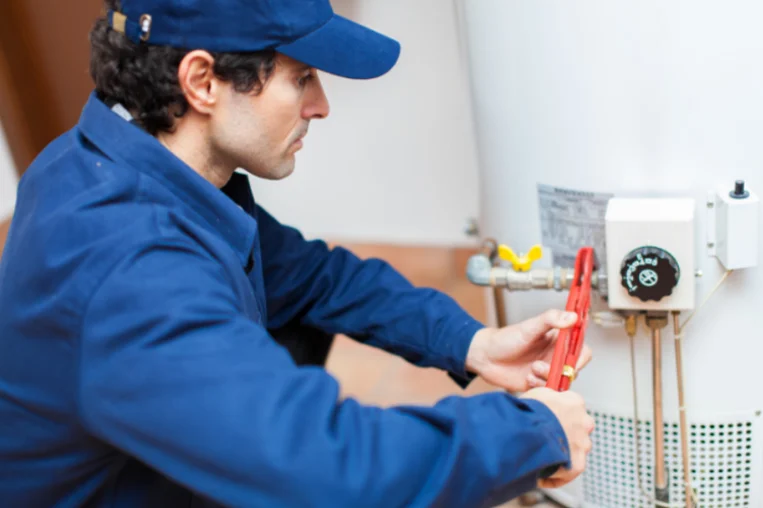
Heat Pump Water Heaters: The San Jose Smart Choice
For San Jose homeowners, heat pump water heaters (HPWHs) deserve special attention. According to the U.S. Department of Energy, heat pump water heaters use electricity to move heat from one place to another instead of generating heat directly, making them 2 to 3 times more energy efficient than conventional electric resistance water heaters.
San Jose’s mild climate is ideal for HPWHs, which operate most efficiently in spaces that stay between 40°F and 90°F year-round, which describes most San Jose garages, utility rooms, and mechanical closets. PG&E offers rebates for qualifying heat pump water heater installations, which can meaningfully reduce the upfront cost. Check pge.com for current rebate amounts, as these change periodically.
The energy savings are real: switching from a conventional electric water heater to a heat pump water heater in a San Jose home can reduce water heating costs by 50% to 70% annually, depending on usage.
California’s Title 24 building energy code increasingly favors heat pump water heaters for new and replacement installations. Quality First can help you determine which system qualifies for the best available rebates and long-term savings in your specific home.

What a Well-Functioning Water Heater Actually Feels Like
When your water heater is properly sized, maintained, and running correctly, hot water is something you stop thinking about entirely. Every shower is full and hot. Dishes get done without waiting. Back-to-back morning showers are not a negotiation.
For San Jose families that have lived with chronic hot water shortages, getting a properly functioning system — whether through a targeted repair or a well-chosen replacement — feels like a significant quality of life upgrade. And for homeowners making the switch to a heat pump water heater, that upgrade comes with a monthly PG&E bill that is noticeably lower than before.
The goal is to never think about hot water again. That’s what the right system feels like.

How Quality First Approaches Water Heater Problems in San Jose
At Quality First Home Improvement, we do not start with a sales pitch. We start with a diagnosis. Our San Jose team assesses the actual condition of your water heater, checking elements, thermostats, anode rod, sediment levels, and overall tank integrity, and gives you an honest, straightforward recommendation.
If a flush or element replacement is all you need, that’s what we will tell you. If your tank is at the end of its useful life, we will walk you through your replacement options clearly, including which systems qualify for current PG&E rebates and California energy incentives, and give you a written estimate before any work begins.
Get up to 25% OFF
Call 888-993-1391 or visit qualityfirsthome.com to book before June 30.